Book Review

Folklorn by Angela Mi Young Hur

Folklorn by Angela Mi Young Hur uses magical realism to explore Korean mythology, cultural identity, mental health, and the enduring bonds of family. The novel opens with Elsa Park, a Korean-American experimental physicist conducting doctoral research on neutrinos (also known as ghost particles). She is confident in her studies, has no filter, and a prickly disposition, making her decidedly unlikable to those around her—yet an interesting character for readers to follow. Upon learning of her mother’s sudden passing, Elsa is forced to return home, where she begins a journey of self-discovery as she explores the Korean folktales her mother has left behind.

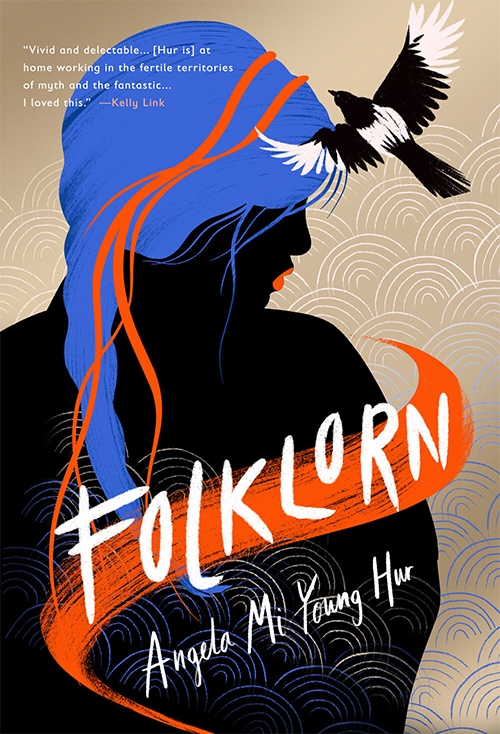
Book cover for Folklorn by Angela Mi Young Hur.

As if anybody wants to be told that their ability to endure is their greatest virtue. No wonder we get invasions and occupations, war and asshole husbands. What kind of stories, I wonder, do the white countries tell of themselves?

Angela Mi Young Hur, Folklorn

As far back as she can remember, Elsa’s mother has warned her that the women in their bloodline are doomed to live out the traumatic events outlined in a series of Korean folktales. Elsa constantly questions the abiding narratives that define cultural hegemony, so it’s in her nature to doubt her mother’s warnings; however, when she begins to see the supposedly imaginary friend she had as a child, Elsa interprets it as a portent of things to come and realizes there must be more to her mother’s stories. It’s either that, or she’s inherited her mother’s mental health issues, and the former is somehow easier to stomach than the latter, so she commits herself to researching the origins of her mother’s stories.

Folklorn is an especially nuanced examination of identity and race as they pertain to immigrants and diasporic communities. Elsa’s parents moved to America to make a better life for themselves, although they could not outrun the problems resulting from their own personal flaws. In addition to generational traumas, Elsa and her brother Chris struggle with the “model minority” myth, as well as “the freedom not to be grateful, indebted and beholden” like their immigrant parents. And Oskar, whom Elsa meets while learning about her mother’s folktales, is a Korean orphan adopted by Swedish parents and raised to ignore his race completely. Together, these seemingly disparate narratives provide a robust, decolonized illustration of the immigrant experience seldom seen in other novels.

We have full right to these stories of our ancestors, even more so because we are of the diaspora. These tales—like us—have traveled far across time and space, to be remade and understood in a new light.

Angela Mi Young Hur, Folklorn

The narrative structure in this book is difficult to follow as it jumps across time and space and struggles to straddle the line between academic book project and contemporary novel. The first of three parts, which consumes a little over 40% of the novel, was most challenging to read. Dense language and physics concepts attempt to teach readers about Elsa’s doctoral work while juxtaposing her passion for ghost particles with the Korean folktales that continue to haunt her. However, it’s simply too tedious for non-experts to digest while also attempting to establish other expository details at the beginning of the book. Elsa’s work is easiest to understand during a brief conversation she has with a cab driver, where she uses a metaphor about ice cream flavors to explain her research to an ordinary person. I would argue that’s all we need to know about it. Simply because Elsa is always thinking about her work does not mean we need to read about her thinking about her work, particularly because the more interesting aspects of Folklorn are about her family’s heritage and the mystery surrounding her mother’s stories.

Similarly, much of the dialogue about Korean myth, provenance, and book history in the third part of the novel is so heavily academic that it feels like a chore to read unless I’m getting a CV line for my efforts. I like a well-researched novel just as much as anyone else, but many parts of Folklorn read more like a scholarly publication (or conversations and correspondence about one). I repeatedly became impatient with the plot and pacing while Elsa and Oskar waxed poetic about their research.

Expats complain about leaving phantom lives behind, the other life unlived. Immigrants are too busy surviving to whine about forsaken selves. But now repatriated—I’m even more ghostly.

Angela Mi Young Hur, Folklorn

Execution of the magical realism in this novel is disorienting, but I’m beginning to think that’s by design. The Korean folktales are real insofar as they’re stories with histories that span across centuries, but Elsa’s spiraling mental state paired with ill-advised efforts to self-medicate left me confused as to how we ought to perceive her visions. Sometimes I’d be halfway into one of her hallucinations before I realized what was happening. In retrospect, I wonder if the point was to illustrate just how unsettling and frustrating the experience is for Elsa. It is this ambiguity that makes the novel’s conclusion strangely wistful yet satisfying.

As an Asian-American academic with immigrant parents in a diaspora community, I related strongly to much of the experiences Elsa describes, and I particularly enjoyed learning about her family in the portions of the novel that highlight her past and her time with her brother. I also appreciate that Folklorn tackles the ambitious task of unpacking the many aftereffects of colonialism that continue to impact Asian diaspora communities. However, I wish the novel focused less on Elsa’s academic personality so that this important story could be a little more accessible for readers.

Thank you to NetGalley and Erewhon Books for sharing an advanced reader copy of this book in exchange for an honest review.
Book Review

Honey Girl by Morgan Rogers

Honey Girl by Morgan Rogers opens with 28-year-old Dr. Grace Porter celebrating her PhD in astronomy with a girls’ trip to Las Vegas, which ends with Grace drunkenly marrying Yuki, a woman she meets that night. The dreamy, lyrical prose describing her wife and the way Grace feels when she’s with her instantly makes clear this isn’t an embarrassing mistake to be undone as quickly as possible. This is a new beginning for Grace, a swerve from her otherwise carefully planned life. It sets her on a path to figuring out if she actually wants the idealized visions of success she’s felt compelled to pursue all her life.

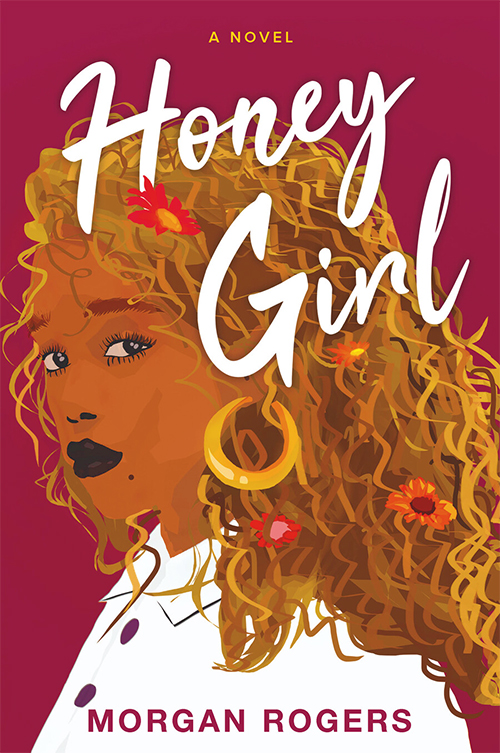
Book cover for Honey Girl by Morgan Rogers

She is afraid of being a brown, gold, bee-honey lesbian in an academic industry all too willing to overlook the parts of her that don’t make sense to them.

Morgan Rogers, Honey Girl

Yuki, who hosts a late-night radio show for “lonely creatures” when she’s not busy waitressing, leans into everything Grace has been conditioned to believe works against her pursuit of success. These two characters work remarkably well as foils to one another. Yuki helps reveal to Grace what she’ll lose if she continues sacrificing personal relationships and mental health in order to grasp at professional opportunities that aren’t promised. She teaches Grace it’s okay to toss the entire script and redefine what’s best for her. And Grace grounds Yuki, who’s constantly getting lost in fleeting adventures from her listeners as she searches wearily for a home in her very own story. It is such a delight to witness these fully realized characters learn how to weave their lives together and grow into better people as a result.

The monster motif—particularly persistent in Yuki’s radio shows about actual supernatural creatures—is most striking when Rogers employs it as a metaphor in Grace’s struggle to find belonging. It is only in refusing to be the monster in her own story—the element that won’t fit or conform—that empowers Grace to start prioritizing herself by attending therapy to be better present in her own life. This part of the novel is messy and emotional and often difficult to read, but learning to be kind to yourself—to be your best self—is hard work.

She will not let them spin her into a scary story, a thing whispered about and cast aside.

Morgan Rogers, Honey Girl

Grace’s parents—her father, especially—cement the idea that you’re never too old for a coming-of-age. Colonel, her ex-military father, might initially remind readers of toxic parental figures who’re immovable forces against progress and growth. But he eventually reveals his own struggles and anxieties, making his point-of-view more understandable. Grace’s relationship with Colonel is complicated and nuanced; they’re rarely on the same page as she begins to explore what will make her happy, but Rogers never makes him Grace’s enemy. Grace’s upbringing is different from her father’s, which causes much of the strife in their relationship, but ultimately, they both want Grace’s happiness. It’s worth noting, however, that were it not for the importance Rogers places on communication between all her characters, Grace and Colonel might never have moved past their misunderstandings. Of course, communication only works when both sides are willing to engage.

At its core, Honey Girl is largely a novel about queer friendships and found family. Grace and Yuki each boast a quirky cast of warm, caring companions who offer support, witty banter, and sage advice as they strive to build a life together. The characters who orbit Grace and Yuki also have their own romances and dramas, making their social lives especially immersive and comforting for readers.

I knew the field was going to be difficult to navigate, but I thought if I pushed long enough and hard enough, it would just bend to my will…But what if I was right to step away? What if I make my own career, instead of going after the most prestigious job? What if the best job is the one that makes me happy and satisfied?

Morgan Rogers, Honey Girl

As a woman of color who’s also earned a PhD, I love this novel for how it so precisely gives voice to the anxiety and existential dread that comes with attempting to balance what is expected of me personally and culturally alongside the urgency of what I yearn to achieve professionally within an institutional model that relies on outdated narratives and histories to define value in a system that doubts and excludes me at its ivory tower core.

Rogers does the important work of shining a light on this tension by broaching difficult topics that don’t always have easy answers. And she gifts us with Grace, who chooses to invest in herself when she comes to terms with the reality that is an academic system that will only suffer for its inability to make room for her at present.

Honey Girl refuses to endorse systems that demand contorting yourself into something unrecognizable and uncomfortable to fit within boxes you don’t even want. It champions self-care as the path towards self-empowerment; it highlights the value of finding your tribe and being a good friend. Finally, it reminds us that happiness and success are subjective concepts defined only as broadly as we allow.

Book Review

Anxious People by Fredrik Backman

Anxious People by Fredrik Backman is one of the quirkiest, most delightful novels I’ve had the pleasure of reading. It’s equal parts humorous and tragic, bewildering and familiar—never just one thing by design. This locked-room mystery opens with a failed bank robbery at a cashless bank (hence the failure), followed by an accidental hostage situation at an apartment viewing from which the hostage-taker/would-be bank robber vanishes, leaving father-son police duo Jim and Jack so perplexed and out of their depth that they Google how to figure out this crime that didn’t actually take place, using testimony from eight hostages with wildly different, unhelpful takes.

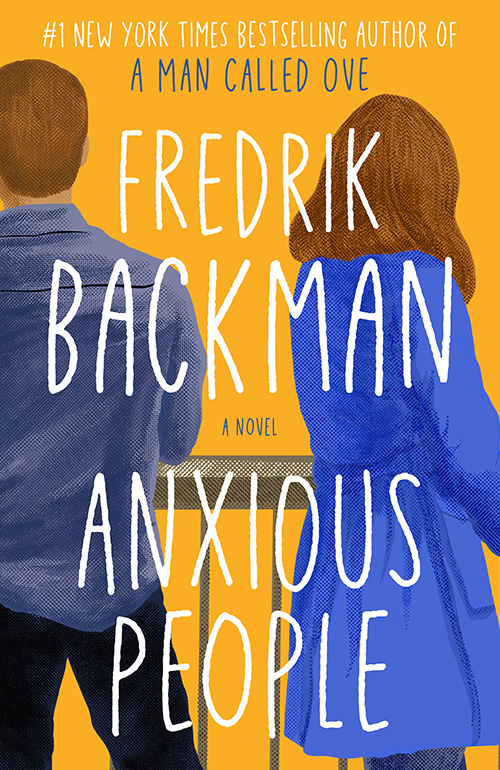
Book cover for Anxious People by Fredrik Backman

It’s always very easy to declare that other people are idiots, but only if you forget how idiotically difficult being human is.

Fredrik Backman, Anxious People

The hostages include Zara, a cynical bank manager emotionally paralyzed by grief and depression; retired couple Anna-Lena and Roger, who flip apartments to avoid addressing problems in their marriage; pregnant lesbian couple Julia and Ro, who struggle with the weight of their anxieties about parenthood; achingly sweet and grandmotherly Estelle, nursing a deep and familiar hurt; the hilariously focused real estate agent who, in spite of the hostage situation, is most concerned no one appears to show appropriate interest in the apartment or her cleverly named real estate agency, House Tricks; and, finally, poor Lennart, who somehow ended up in his underwear, trapped in a giant rabbit’s head, and a little regretful he’s wound up in this situation but along for the ride, regardless.

Anxious People is told through interweaving narratives that reveal how seemingly unrelated characters from varying walks of life are connected—a truth that echoes throughout the major themes in this novel. Backman employs a disarming charm and wit to broach heavy topics such as suicide, survivor’s guilt, and depression with a fresh and welcome frankness that feels safe and invites discussion. Zara, one of the most abrasive personalities in the bunch who literally carries around her anxiety with her, ended up being one of my favorite characters because Backman is able to demonstrate through her that we should all be so kind as to forgive ourselves for past transgressions.

We need to be allowed to convince ourselves that we’re more than the mistakes we made yesterday. That we are all of our next choices, too, all of our tomorrows.

Fredrik Backman, Anxious People

Given the novel is set in a small Swedish town near Stockholm, the concept of “Stockholm Syndrome” seems almost unavoidable, especially because it is derived from the psychological bond formed between a captor and his hostages during a botched bank robbery that took place in Stockholm, Sweden in 1973. Cleverly, Backman hardly mentions it by name, which prevents readers from noticing as they fall prey to a version of it while they commiserate with often unlikable yet sincere characters just trying their best to make it from one day to the next. Any one of us could’ve been trapped in that apartment. In fact, any one of us could’ve been that bank robber.

Backman strives to cover the full, messy spectrum of emotions that accompany uncomfortable experiences like anxiety, guilt, and grief, which allows him to winnow out poignant messages about forgiveness, hope, and love. The most striking result of his storytelling style is it reflects truths about ourselves we recognize only once we identify them in Backman’s characters. That is the point, of course.

That’s the power of literature, you know, it can act like little love letters between two people who can only explain their feelings by pointing at other people’s.

Fredrik Backman, Anxious People

Anxious People reminds us we are never alone in shouldering our burdens, even though it might feel that way sometimes. Through humor and heartbreak, Backman weaves a thought-provoking story that ultimately impresses on us the urgency of exercising kindness, compassion, and patience towards others and, most importantly, towards ourselves.

Book Review

Infinite Country by Patricia Engel

Infinite Country by Patricia Engel follows a mixed-status Colombian family trying to build a better life for themselves. Elena and Mauro meet and fall in love as teens, their sweet romance a bright spot of hope against the backdrop of a brutal Bogotá. After having their first child, they set their sights on the United States for a better life, better wages, and better opportunities. They send money back to Elena’s mother in Colombia as their ideal situation is to work hard enough to secure ample funds for a more comfortable life in Colombia, but one thing leads to another, and they overstay their tourist visas. What started as a goal to build a better life in Colombia ends with a universal desire simply to thrive as one united family.

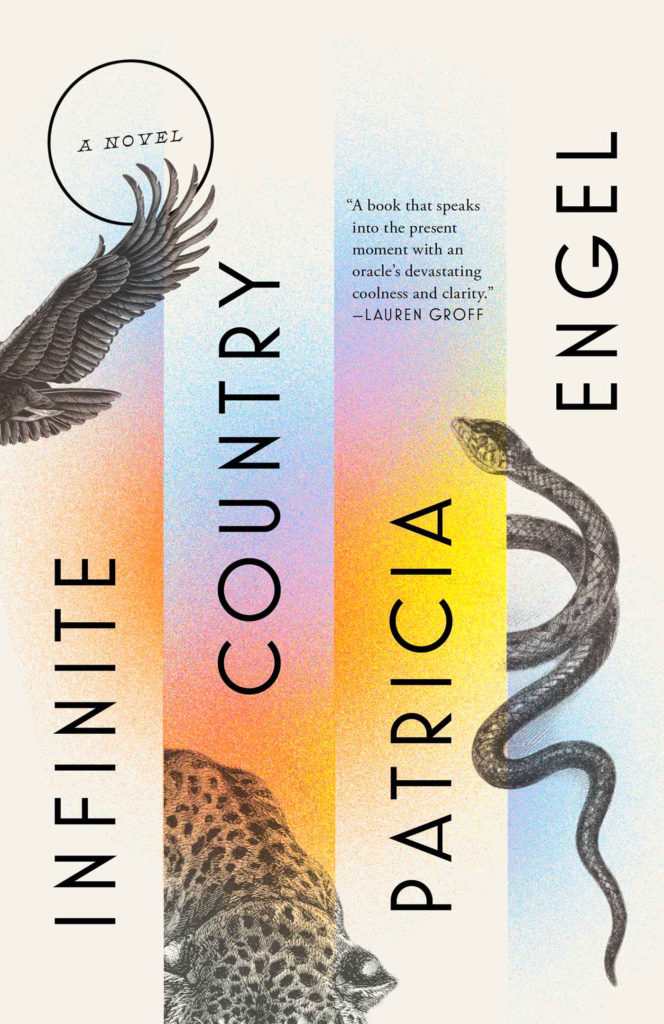
Book cover for Infinite Country by Patricia Engel

What was it about this country that kept everyone hostage to its fantasy?

Patricia Engel, Infinite Country

Infinite Country follows multiple viewpoints, opening with a chapter from Talia, Elena and Mauro’s youngest daughter. After one (arguably warranted) moment of violence, she’s racing against the clock as she escapes a reform school and makes her way to a flight into America that will reunite her with a mother and two siblings she hasn’t been with since she was a baby. Her story is thrilling, she’s an interesting character to follow, and the first chapter (and that first line!) completely pulled me in; however, the second chapter drops that thread immediately and picks up another character’s narrative several years back. It’s not until about halfway through the novel that you understand what’s going on with the narrative structure, and even then, it’s a little disorienting.

Karina, Elena and Mauro’s eldest daughter, is a dreamer in the political and literal sense. She crossed into the United States with her parents when she was a baby, and we understand it is she who has compiled the winding narratives that make this novel, some literally in the second-person as begrudging contributions only a younger brother might provide, her own in the first-person, and the rest of her family’s in the third-person. Karina’s deepest desire is for a day she feels safe enough with her family to pursue her dream to be a writer. The very existence of this book is hopeful since it implies Karina got her wish.

That said, I would’ve organized the narratives differently. Instead of seemingly random jumps into different narratives, I would have liked something a little more linear as I think it’d be easier to follow the intricacies of each person’s story. Because there was such a large gap between Talia’s first chapter and her next, I was wondering for a while what her significance was since that wild child didn’t seem to fit at all into Elena and Mauro’s blossoming romance. Moreover, since she is their youngest child, we don’t even meet her in their story for quite a while. I wish I hadn’t felt so distracted by it in the beginning of the novel. It made for a winding plot that was difficult to pick up for me, though I wonder if it was by design. When your entire life dwindles down to making ends meet and seeing one moment to the unpredictable next, perhaps it’s difficult to forecast future goals until the ground beneath your feet is a little steadier. We do see that as the children grow older, and Elena and Mauro reflect back on their connections to their own parents. Choices for this family become clearer, although I wonder if it’s because options to pursue happiness and security also become limited.

The ending of this novel, while satisfying, seems rushed. I wish we’d gotten a bit more on Mauro’s journey back to his family. The emotional despair he feels as a husband and father when he’s deported to Bogotá is relatable, whether or not a person is on a journey similar to his, but I wish we could’ve read more about his struggle to find himself and also his drive to find a way back to his family. Mauro tries his best, and I wanted to see him realize his family believes it sincerely. The ultimate question this novel explores is how to define the idea of home. Are our characters yearning to go back home to Colombia? Is America their new home? What about any one of the several locations within America as they moved around the country, or even the final home we see them in? Engel argues the idea of home is something far greater, whose shifting boundaries cannot be mapped, encompassing territories impossible to chart:

Maybe there is no nation or citizenry; they’re just territories mapped in place of family, in place of love.”

Patricia Engel, Infinite Country

Infinite Country gives voice to issues of immigration and displacement that are all too common in our world but are often banished to the shadows of national narratives. The novel provides glimpses into the daily concerns of mixed-status immigrant families and their divided lives while also emphasizing universal truths that will make you really care about this family because they’re really not that different from your own. This novel is impactful, hopeful, heartbreaking, and so real, with a poignant message that will be relevant for a long time.