Book Review

Every Exquisite Thing by Laura Steven

Every Exquisite Thing by Laura Steven is a sapphic young adult dark academia retelling of The Picture of Dorian Gray by Oscar Wilde. (There’s NO WAY I could resist a premise like that!) The novel follows Penny Paxton, who arrives at the elite Dorian Drama School convinced it will transform her into someone beautiful enough, talented enough, and unforgettable enough to matter. As the daughter of a famous supermodel, Penny already understands the brutal logic of her world: beauty is currency, and for women and girls, it can feel like the only path to power or control. But as Penny chases perfection, she quickly discovers all that glitters is not, in fact, gold. It’s something far more sinister and rotten that has been waiting to consume girls like her.

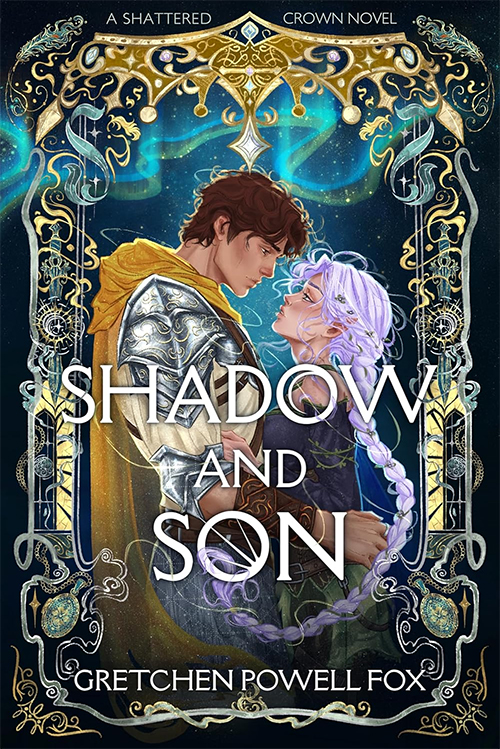
Book cover for Every Exquisite Thing by Laura Steven.

Girls want power. And sometimes beauty is the closest substitute.

Laura Steven, Every Exquisite Thing

Every classical novel has inevitably inspired retellings, reimaginings, and the occasional “what if we made this gayer?” reinvention. But the best ones don’t just swap names and settings. They figure out what made the original story endure, then twist that question toward a different wound. Every Exquisite Thing does exactly that. Steven takes the old Dorian Gray question, “what would you sacrifice to stay beautiful?” and gives it to girls who have already been taught that beauty is the thing most worth sacrificing for. Wilde’s Dorian is a beautiful young man whose face allows him to move through society untouched while his portrait bears the evidence of his corruption. Penny’s version of that bargain is different because her desire for beauty has been trained into her long before anything supernatural enters the picture. Penny wants beauty because she has inherited a world that treats it as evidence of value. The real tragedy is that she has been taught to confuse being beautiful with being worthy.

Penny is a really compelling FMC for this kind of story because her vanity is so familiar. She is ambitious, jealous, insecure, hungry, and sometimes (especially at the beginning of the novel!) so deeply unlikable I wondered how long I could sympathize with her. But as the story unfolds, it becomes harder to separate Penny’s worst impulses from the world that taught her to survive this way. She has grown up close enough to fame to understand its power, but not close enough to feel secure in it. That juxtaposition gives her obsession with beauty and perfection the rancid edge of a survival instinct gone septic. She wants the lead role. She wants the perfect body. She wants the stunning face. She wants proof that she isn’t just someone’s daughter. And Steven is very good at showing how that desperation can curdle into cruelty without flattening Penny into a cautionary tale.

My grandmother, meticulously measuring herself with a pink dressmaker’s tape, and my mother, observing, internalizing. A generational curse passed down like a set of ancient pearls, impossible to escape from once they were hanging around your neck.

Laura Steven, Every Exquisite Thing

One of my favorite parts of Every Exquisite Thing is how pointed the Shakespeare productions feel in a story about girls learning which versions of themselves are allowed to exist. Steven is reimagining Wilde rather than simply performing Dorian Gray back to us, while the students are doing the opposite with Shakespeare: stepping into scripts that have already been written, studied, admired, and repeated for centuries. So the school’s emphasis on performance goes far beyond the stage. Everyone is learning how to fit themselves into roles other people already understand. Penny’s casting as Lady Macbeth makes that even more pointed. Lady Macbeth knows what it means to want power from a position where she cannot simply claim it outright, and Penny is rehearsing that same impossible lesson: how to want something without being punished for wanting too much.

I also really liked that the sapphic relationships are not treated like a glossy update to a classic text. They are messy, charged, and tangled up in the same questions of beauty, wanting, and self-image that shape the rest of the novel. The Picture of Dorian Gray has always felt deeply queer to many readers, even when its queerness lives in implication, obsession, secrecy, and the fear of being exposed. Every Exquisite Thing brings that desire into the open. In a world where girls are constantly taught to measure themselves through desirability, attraction can blur very quickly with admiration, envy, rivalry, and hunger. Sometimes these characters want each other. Sometimes they want to beat each other. Sometimes they want to become each other. And sometimes all of that is happening at once. Queerness here is not an escape from the beauty economy. It disrupts it and shows how difficult it can be to desire someone clearly when you have been taught to compare yourself to everyone.

I was so perfect before the world told me otherwise.

Laura Steven, Every Exquisite Thing

The portrait itself also gets a smart modern update. Wilde’s portrait can be hidden away, left to rot in private, while Dorian’s face remains untouched. Steven understands that contemporary image culture does not work like that. In Penny’s world, beauty is documented, circulated, screenshotted, weaponized, and preserved by everyone with a phone. A photograph can be evidence, social currency, punishment, or proof of who someone is supposed to be. That makes the portraits feel even stranger when they appear because they’re not just gothic decoration. They are part of a much larger ecosystem of images haunting these girls from every angle. Mirrors, photos, paparazzi shots, portraits on the wall—all of them become versions of the same question: what happens when the image becomes more powerful than the person it claims to capture?

By the end, Steven has created a retelling that feels more like excavation than homage. She does not simply ask, “What if Dorian Gray were sapphic?” Instead, she imagines what Dorian Gray becomes in a world where girls are taught to curate themselves before they know who they are, and where beauty is marketed as empowerment while still being used as a leash. The result is gothic, bitter, romantic, and vicious in all the right places. I absolutely devoured this book, and so will you!

Thank you to NetGalley and Wednesday Books for sharing an advanced reader copy of this book in exchange for an honest review.
Book Review

Burn the Kingdom Down by Addie Thorley

Burn the Kingdom Down by Addie Thorley is a young adult enemies-to-lovers romantasy where a second-born princess infiltrates an enemy kingdom to avenge her sister’s suspicious death, only to discover that the truth behind that death, and the kingdom she was taught to hate, is far more complicated than she imagined. What starts as a revenge-driven premise quickly shifts into something more uncertain, as Indira navigates grief, political tension, and a marriage she never wanted. With enemies-to-lovers tension, memory-based magic, and a mystery at its core, the novel sets itself up as a thrilling story about vengeance, truth, and the real cost of both.

Book cover for Burn the Kingdom Down by Addie Thorley.

A gilded cage is still a cage, little sister.

Addie Thorley, Burn the Kingdom Down

I really wanted to love this one. The premise alone is so compelling: a crown princess is sent away in chains, returns home dead, and her younger sister steps into her place with a plan to infiltrate, investigate, and burn everything down if necessary to get revenge. I mean, a title like Burn the Kingdom Down sets a very specific expectation, and for me, that expectation was feminine rage! I was ready for sharp edges, decisive action, and a heroine actively pursuing vengeance. Instead, much of the story feels far more internal and, at times, very static.

Indira is a character with a lot of potential. I liked the idea of her as the “spare,” someone not raised to rule, yet suddenly forced into a role that requires both political strategy and emotional resilience, all while she’s grieving her sister’s death. There’s something inherently interesting about a character who is underestimated by everyone around her but still determined to succeed. Her magic, too, stood out to me. The ability to nurture and grow plants initially reads as soft or passive, but the story does a nice job of showing how powerful that kind of magic can be. That contrast between perceived weakness and actual strength is one of the more compelling elements of her character.

That said, spending time in Indira’s head was often where the book lost me. Much of the narrative is driven by her internal monologue, and it tends to circle the same doubts and suspicions without evolving in a way that feels engaging. Indira second-guesses herself constantly, and while some of that makes sense given her circumstances, it starts to feel repetitive rather than illuminating. The repeated conversations she has with an imagined version of her sister, Rowenna, especially stand out. What could have been an interesting way to explore grief and memory instead drags on for way too long.

Love isn’t finite. A portion isn’t taken from one recipient when it’s shared with another. It simply grows.

Addie Thorley, Burn the Kingdom Down

Where the book really shines is in its worldbuilding and magic system. The idea of memories as a source of power that can be harvested, manipulated or even stored is genuinely fascinating. It opens up questions about how memory shapes identity and how easily it can be distorted, which ties nicely into the broader mystery of what really happened to Rowenna. I also loved the contrast between the two kingdoms: Tashir, rooted in soil and growth, and Vanzador, built on stone and mountains. They feel like complete opposites, but the story hints at how they’re meant to function in balance rather than in opposition, adding an extra layer of thematic depth.

The central mystery is what really kept me reading, even when the pacing lagged. As Indira uncovers more about her sister’s life in Vanzador, the narrative effectively complicates what she thought she knew. Watching her slowly realize that Rowenna may not have been the person she believed was one of the more interesting arcs in the book. There’s a strong thread here about how we idealize the people we love, and what happens when that image starts to fracture.

However, the plot sometimes leans too heavily on telling rather than showing. We’re often told that Indira is investigating, researching, or searching for answers, but we don’t always see those moments play out meaningfully. Instead, they’re summarized or skipped over, which makes parts of the story feel like connective tissue rather than fully realized scenes. It creates a sense of moving from point A to point B without the emotional or narrative weight that should exist in between.

The romance also fits into this pattern. The connection between Indira and Prince Alaric develops alongside the unraveling mystery, and I did appreciate how their bond ties back to themes of family and understanding. But like other elements of the book, it felt somewhat underdeveloped compared to the strength of the concept.

I am choosing to build rather than burn.

Addie Thorley, Burn the Kingdom Down

Overall, this is one of those books where the idea is stronger than the execution. There’s a really intriguing story here about grief, memory, and the narratives we build around both people and nations. The worldbuilding and magic system are genuinely compelling, and Indira as a character is layered and interesting. I just wish the overall character development and pacing had matched the ambition of the premise. For a book that promises to burn a kingdom down, I wanted to feel way more of that fire on the page.

Thank you to NetGalley and Sourcebooks Fire for sharing an advanced reader copy of this book in exchange for an honest review.
Book Review

Empire of Flame and Thorns by Marion Blackwood

Empire of Flame and Thorns by Marion Blackwood is an enemies-to-lovers romantasy where a fae girl enters a series of deadly trials for a chance at freedom. It’s set in a world where dragon shifters rule, justifying their dominance over fae through stories of a half-remembered past where the fae once held power over the dragon shifters, though neither side truly remembers how or why that world ended. Now, the fae live under tight control, their choices limited, their futures dictated. But every 150 years, the Atonement Trials offer three winners the chance to leave this oppressive system. Selena Hale enters the trials not just for her own survival and freedom, but for the possibility of helping the fae rebellion in a way she never could from within.

Book cover for Empire of Flame and Thorns by Marion Blackwood.

Because fear is a weapon. It gives other people power over you without them even having to do anything.

Marion Blackwood, Empire of Flame and Thorns

This is one of those books that pulls you forward through sheer momentum alone. The trials are chaotic by design, governed only by whatever rules the dragon shifters decide to enforce in the moment. That instability raises the stakes immediately, especially because the fae are not competing for glory or status, but for their lives. The intensity never settles into a predictable rhythm either. Instead, each challenge forces Selena to adapt, and the reader is right there with her, recalibrating what survival even looks like from one trial to the next.

Selena is a compelling protagonist, in part because her growth feels as much internal as it is external. She enters the trials with something to prove, not just to the world around her, but to herself. Her ability to manipulate emotions has made her an outsider among her own people, leaving her caught between wanting connection and knowing she makes others uneasy. That tension carries into how she moves through the trials. She wants to be liked and accepted, but she also has to learn how to prioritize her own survival and sense of self. Watching Selena begin to prioritize herself, trust her instincts, and own her power rather than ignore or diminish it is one of the most satisfying arcs in the book. By the final trials, both Selena and the reader have a clearer understanding of what her abilities can do and why they matter.

You do seem to have an unhealthy obsession with tracking me down in empty corridors. Can I suggest a hobby instead? Perhaps knitting since you’re so fond of pointy sticks.

Marion Blackwood, Empire of Flame and Thorns

Selena and Draven’s dynamic works because it disrupts expectations from the very beginning. Their first encounter sets the tone, with Selena turning what should be a moment of danger into something chaotic and unexpectedly funny. That same energy carries into the trials, where their back-and-forth builds on that initial clash and gradually becomes something else as their connection deepens. The banter is quick and does more than just entertain us, as there’s always an undercurrent of tension shaped by the fact that Draven holds power within the system that controls Selena. He reads as distinctly morally grey, shifting in ways that are hard to fully understand until later, which gives the enemies-to-lovers arc its edge.

The story’s deeper potential lies in its suggestion that power is less about truth and more about who controls the narrative of the past. The idea that the dragon shifters’ rule is justified by a history no one fully remembers raises a larger question about inherited narratives and how they are used to sustain systems of power. Both sides are operating on stories that have been passed down, shaped and reshaped over time, until they function less as truth and more as justification. There are moments where the text gestures toward this, particularly in how the fae themselves question the legitimacy of their oppression, but it stops short of fully engaging with it. There’s a deeper conversation here about cycles of violence, about how long a debt can be carried across generations, and who ultimately pays for it. I hope these early threads are laying the groundwork for something more fully realized in future installments.

I don’t care if you hate me. Truth be told, I kind of hate you too. And that’s why I don’t hold back when I talk to you.

Marion Blackwood, Empire of Flame and Thorns

Overall, this is an action-packed, immersive, and fun romantasy that rewards paying attention, even when you’re not entirely sure what you’re noticing. There’s a steady sense that something isn’t adding up, and the final plot twist brings that unease into sharp focus. It doesn’t tie things up so much as it opens them further, leaving a lot still to explore, both in terms of character and the larger stakes. One thing I know for sure is that I’ll be picking up book 2. I need to see what happens after that ending!

Thank you to NetGalley and Scarlett Press for sharing an advanced reader copy of this book in exchange for an honest review.
Book Review

My Roommate from Hell by Cale Dietrich

My Roommate from Hell by Cale Dietrich is a YA paranormal romance where an anxious college freshman discovers his new roommate is literally the Prince of Hell, sent to Earth through a supernatural exchange program meant to foster peace between the two realms. Owen Greene arrives at Point University with a careful plan: keep his scholarship, get good grades, secure a coveted internship, and avoid unnecessary chaos. That plan immediately unravels when Zarmenus Bloodletter moves into the other half of his dorm room. Zar’s arrival brings demon cats, accidental fires, and chaotic dorm life into Owen’s carefully structured world, forcing him to navigate supernatural diplomacy, roommate drama, and feelings he definitely did not plan for.

Book cover for My Roommate from Hell by Cale Dietrich.

He is chaos, I am order. We make no sense.

Cale Dietrich, My Roommate from Hell

The first part of the novel leans heavily into this odd-couple roommate dynamic, and it’s where the book finds much of its humor. Owen’s anxious inner monologue is genuinely funny, especially as he tries to rationalize the increasingly ridiculous situations unfolding around him. His disbelief at demon cats, ghostly mishaps, and Zar’s complete lack of human etiquette makes for several laugh-out-loud moments. The funniest part is that most of Owen’s issues are actually about common roommate quibbles, and not the demonic surprises that keep popping up!

At the same time, this early section is also where the pacing struggles the most. The first half of the book centers on Zar’s messy, disruptive behavior, but also on Owen’s repeated refusal to confront him about it. Instead, Owen cycles through a familiar internal pattern: he decides he’ll talk to Zar tomorrow, worries about ruining their relationship, convinces himself it’s not that bad, and ultimately says nothing. Because his ability to secure an important internship depends on getting along with his supernatural roommate, Owen keeps giving Zar “one more chance,” even going so far as to clean their room for him. The result is that the conflict becomes repetitive. Oddly enough, Zar’s antics are less frustrating than Owen’s refusal to simply talk to his roommate and communicate his issues.

Point’s most famous exchange student might be a demon, but he’s not Satan. There’s a difference.

Cale Dietrich, My Roommate from Hell

Once the story reaches the fake dating plotline, the tone shifts into something softer and more romantic. In order to smooth over some supernatural complications, Owen and Zar decide to pretend they’re a couple. Watching them construct elaborate schemes to convince other students that their relationship is real leads to several sweet and awkward moments, and the premise taps into the classic appeal of the fake dating trope. This section has a lot of charm, but the execution feels slightly uneven.

The fake dating storyline begins fairly late in the book, and there’s relatively little one-on-one interaction between the Owen and Zar before it starts. Much of the first half focuses solely on Owen navigating dorm life, dining halls, and the overwhelming experience of starting college while trying to make new friends. Those slice-of-life moments do capture the awkward uncertainty of freshman year well, especially Owen’s anxiety about socializing after the first week of school. His personality as a chronic worrier paired with quiet optimism about college is easy to recognize, particularly for anyone who remembers how strange those early college days can feel. But the transition from that, into the fake dating part of the story that more actively involves Zar feels a bit disjointed, particularly after Owen spends so much effort avoiding interactions with his roommate.

I don’t know what kind of game he’s playing, and admitting that yes, I do find him, at least superficially, extremely attractive, feels like a bad move.

Cale Dietrich, My Roommate from Hell

Ironically, once the romance begins, the pacing speeds up too much. Many of Owen and Zar’s more intimate conversations or emotional turning points happen off-page or in quick time skips. Instead of lingering on the yearning, confusion, and “wait, is this still fake?” tension that often makes fake dating stories so satisfying, the story focuses primarily on how they present their relationship in public.

Even with those pacing issues, My Roommate from Hell is still a fun and surprisingly wholesome read. The demon mythology adds a playful supernatural twist to what is otherwise a recognizable college coming-of-age story. Beneath the chaos and humor, the book ultimately centers on Owen learning how to stand up for himself, navigate independence, and figure out what it means to grow into adulthood. The result is a story that feels devilishly fun, occasionally messy, and easy to enjoy, especially for readers who can appreciate the sweetness of a cozy and queer paranormal romance.

Thank you to NetGalley and Wednesday Books for sharing an advanced reader copy of this book in exchange for an honest review.

Book Review

Babel by R.F. Kuang

Babel by R.F. Kuang is a dark academia historical fantasy about language, empire, and the uneasy relationship between knowledge and power. I think what surprised me most about this novel is how gripping it is despite how dense it can be. This is a long, research-heavy novel about translation, colonialism, and academia that reads like historical fantasy on the surface. Underneath, it feels like a sustained argument about language and power, wrapped inside a dark academia setting that the book both loves and interrogates at length. Kuang invites readers to admire the beauty of scholarship while also confronting the systems that make that beauty possible, which gives the entire book a sense of urgency and forward motion.

Book cover for Babel by R.F. Kuang set against a pink background.

Translation means doing violence upon the original, means warping and distorting it for foreign, unintended eyes. So then where does that leave us? How can we conclude, except by acknowledging that an act of translation is then necessarily always an act of betrayal?

R.F. Kuang, Babel

One of the ideas that runs through the entire story is that language is never neutral. In Kuang’s version of Oxford, translation quite literally fuels empire through silver-working, a magical system powered by the subtle gaps between languages. It is such a smart way to make an abstract idea feel tangible. Language already shapes whose histories are recorded, whose stories are believed, and whose perspectives are centered. The novel simply makes that power visible.

The book also feels very in conversation with criticisms of the dark academia aesthetic in general. The libraries and lecture halls remain intoxicating and nostalgic, but the story refuses to romanticize the institution behind them. Academia is shown as a place that produces knowledge while also benefiting from colonial extraction. That tension gives the novel a sense of urgency that feels very current.

English did not just borrow words from other languages; it was stuffed to the brim with foreign influences, a Frankenstein vernacular. And Robin found it incredible, how this country, whose citizens prided themselves so much on being better than the rest of the world, could not make it through an afternoon tea without borrowed goods.

R.F. Kuang, Babel

While reading, I kept thinking about Ngũgĩ wa Thiong’o’s Decolonising the Mind (even though the text isn’t directly referenced). His argument that language carries culture, hierarchy, and systems of domination feels central to every character arc. Separate from Ngũgĩ’s work, but very much in conversation with it, is the historical reality that colonial translation was rarely neutral or precise. British officials often depended on local printers, teachers, and scholars to translate English texts into regional languages, and because those officials were not fluent themselves, the results could be uneven, interpretive, or simply wrong. Those translations were then printed and reprinted until they became their own authoritative versions. Even Shakespeare exists in radically different forms across languages because of this history. That reality makes the novel’s focus on translation feel especially sharp. Language becomes both a tool of control and a site of slippage. Over time, that same linguistic space was sometimes used to resist colonial oppressors. People learned the language of power and then used it in ways the empire never intended. The characters in Babel follow that same trajectory as they begin to realize that the skills meant to sustain the system might also be used to challenge it.

The question of violence sits at the center of the novel and will likely be the most divisive aspect. Kuang pushes the story toward a conclusion that refuses easy or comfortable resolutions. One line in particular captures the book’s moral tension perfectly:

This is how colonialism works. It convinces us that the fallout from resistance is entirely our fault, that the immoral choice is resistance itself rather than the circumstances that demanded it.

R.F. Kuang, Babel

That idea connects closely to the novel’s recurring claim that translation is a form of betrayal. Every act of translation alters the original, reshaping it for new audiences and new purposes. By the end of the novel, that concept extends beyond language. The characters themselves are forced to confront what it means to reshape their loyalties, their identities, and the institution that shaped them.

It’s also worth noting that Kuang’s style may not work for every reader. The narrative includes footnotes, linguistic digressions, and historical context that slow the pacing at times. For me, this was one of the book’s strengths. I studied postcolonial theory during my doctoral work, so the intellectual foundation felt purposeful and familiar rather than overwhelming. I think the academic texture gives the novel a sense of conviction that fits its subject.

What stayed with me most after finishing Babel is how deliberately it dismantles the romantic fantasy of academia while still acknowledging the beauty of language itself. The book never suggests that learning, scholarship, or translation are inherently harmful. Instead, it asks what happens when those pursuits are shaped by systems of power and inequality, and it pushes that question toward an agonizing conclusion. It is a dense and demanding novel, but also a deeply rewarding one. It feels especially resonant right now, and it left me thinking long after the final pages.